
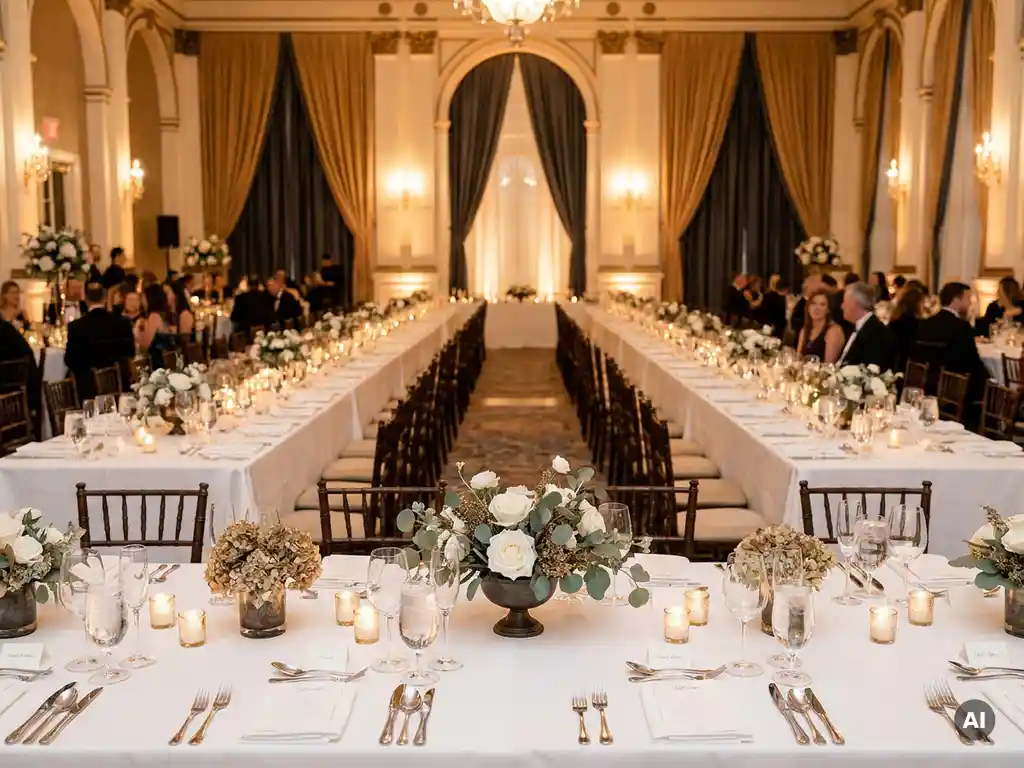
Organizing a seated dinner for 200 or more guests is a significant undertaking that requires careful planning, attention to detail, and strategic coordination. Whether you’re planning a corporate gala, wedding reception, or special celebration, the scale of a large seated dinner presents unique challenges that differ dramatically from smaller gatherings.
Success depends on understanding the complexities of venue selection, seating logistics, catering coordination, and timing requirements. From ensuring adequate space and service capacity to managing guest flow and creating a memorable atmosphere, every element must work in harmony to deliver a seamless dining experience for your large group.
What venue requirements do you need for a 200-guest seated dinner?
A venue for 200 seated dinner guests requires approximately 2,000 to 3,000 square feet of dining space, adequate kitchen facilities or catering access, and sufficient parking for at least 100 vehicles. The space should accommodate round tables of 8–10 guests or long banquet tables while maintaining comfortable circulation areas.
Beyond square footage, consider these essential venue requirements. The ceiling height should be at least 10 feet to prevent the space from feeling cramped with a large crowd. Kitchen facilities must support high-volume food preparation, or the venue should provide easy access for external caterers, with proper loading areas and equipment hookups.
Accessibility features are crucial for large events. Ensure the venue has wheelchair access, adequate restroom facilities (typically one restroom per 75 guests), and proper emergency exits. Sound systems and lighting capabilities should support dinner service and any presentations or entertainment planned for the evening.
How do you plan seating arrangements for 200+ dinner guests?
Seating arrangements for 200+ guests require a systematic approach using digital seating chart software, strategic table placement based on guest relationships and event objectives, and clear numbering systems with escort cards or seating displays to guide guests efficiently to their assigned tables.
Start by categorizing your guest list into groups based on relationships, professional connections, or shared interests. Round tables of 8–10 people work best for conversation flow, while rectangular tables can comfortably accommodate 6–8 guests. Position VIP guests, speakers, or honorees at prominent tables with clear sightlines to any stage or presentation area.
Create a detailed floor plan that accounts for traffic flow around tables, server access routes, and emergency egress paths. Number tables logically, starting from the front or using a system that makes sense for your venue layout. Provide clear signage and consider having staff members assist guests in finding their seats during the initial seating period.
What catering considerations matter most for large seated dinners?
Large seated dinner catering requires precise timing coordination, adequate staffing ratios of one server per 12–15 guests, temperature-control systems to maintain food quality, and streamlined service styles like plated dinners or family-style service rather than complex individual preparations that slow service.
Menu selection significantly impacts service efficiency and guest satisfaction. Choose dishes that can be prepared in large quantities without compromising quality, travel well from kitchen to table, and accommodate common dietary restrictions. Plated service typically works better than buffet style for formal seated dinners, maintaining an elegant atmosphere while ensuring consistent presentation.
Coordinate closely with your catering team on service timing. With 200+ guests, dinner service typically takes 45–60 minutes from the first plate to the last plate served. Plan for adequate warming equipment, proper food safety protocols, and backup plans for any service delays. Consider offering limited bar service during dinner to keep the focus on the meal.
How far in advance should you book venues and vendors for 200-guest dinners?
Book venues and primary vendors for 200-guest seated dinners at least 6–12 months in advance, with popular venues and peak-season dates requiring even earlier booking—up to 18 months ahead. Large-capacity venues have limited availability, especially during wedding season and holiday periods.
Start your venue search first, as availability will determine your event date options. Once the venue is secured, immediately book your caterer, as many venues have preferred vendor lists or exclusive catering partnerships. Photography, entertainment, and floral services should be booked 4–6 months in advance to ensure the availability of top professionals.
Create a booking timeline that prioritizes vendors based on availability constraints. Specialty vendors like lighting designers, linens, or unique entertainment acts may require even earlier booking. Always identify backup options, as large events require vendors with proven experience handling groups of your size.
What logistical details can make or break a large seated dinner?
Critical logistical details include a comprehensive timeline with 30-minute buffer periods, detailed vendor communication protocols, guest arrival management systems, and contingency plans for weather, technical issues, or service delays that could impact the dining experience for large groups.
Develop a detailed event timeline that coordinates all moving parts. Guest arrival and the cocktail reception should be scheduled to allow adequate time for seating without rushing. Coordinate with venue staff on table setup timing, sound system testing, and any special lighting requirements. Assign specific roles to team members for guest management, vendor coordination, and problem resolution.
Communication systems are essential for large events. Establish clear contact protocols between all vendors, venue staff, and your event team. Consider using headsets or mobile apps for real-time coordination during the event. Prepare contingency plans for common issues like delayed arrivals, dietary restriction accommodations, or technical equipment failures.
Transportation and parking logistics often get overlooked but significantly impact the guest experience. Provide clear directions and parking information, or coordinate valet services if needed. For corporate events, consider shuttle services from nearby hotels or transportation hubs to simplify guest arrival coordination.
How GO DMC helps with large seated dinner organization
We specialize in orchestrating seamless, large-scale seated dinners through our comprehensive destination management expertise and three decades of experience with high-profile events. Our team handles every aspect, from venue selection and catering coordination to guest logistics and on-site management, ensuring your 200+ guest dinner exceeds expectations.
Our services for large seated dinners include:
- Venue sourcing and contract negotiation for optimal capacity and service
- Professional catering coordination with trusted culinary partners
- Complete logistics management, including seating arrangements and guest flow
- On-site event coordination with experienced staff
- Contingency planning and real-time problem resolution
Whether you’re planning a corporate gala in Amsterdam, an incentive celebration in The Hague, or a large-scale dinner event anywhere in the Netherlands, our proven expertise ensures flawless execution. Contact our team to discuss how we can transform your large seated dinner vision into an unforgettable reality with precision, partnership, and a passion for excellence.