International corporate retreats bring together teams from diverse linguistic backgrounds, creating unique opportunities for collaboration alongside significant communication challenges. Successfully navigating language barriers requires strategic planning, the right tools, and cultural sensitivity to ensure every participant can contribute meaningfully to the retreat experience.
Whether you’re organizing an executive retreat in Amsterdam or a team-building event in Maastricht, understanding how to address multilingual communication needs is essential to creating inclusive, productive gatherings that achieve their intended objectives.
What are the most common language barriers at international corporate retreats?
The most common language barriers at international corporate retreats include gaps in technical or business vocabulary, varying levels of English proficiency among participants, cultural communication styles that affect interpretation, and difficulty understanding accents or speaking speeds during presentations and discussions.
Beyond basic language comprehension, retreats often encounter challenges with industry-specific jargon that doesn’t translate directly between languages. Participants may understand general conversation but struggle with complex strategic discussions or technical presentations. Cultural communication patterns also create barriers, as some cultures favor direct communication while others rely on context and subtle cues.
Nonverbal communication differences compound these challenges. Gestures, eye contact expectations, and personal-space preferences vary significantly across cultures, potentially leading to misunderstandings even when verbal communication is clear. Time perception and meeting etiquette also differ, affecting how participants engage in structured retreat activities.
How do you plan for multilingual communication before the retreat?
Planning for multilingual communication begins with conducting a comprehensive language assessment of all participants, identifying primary and secondary languages, proficiency levels, and specific terminology needs. This assessment should occur four to six weeks before the retreat to allow adequate preparation time for translation services and material adaptation.
Pre-retreat planning should include translating key materials into participants’ native languages, particularly complex documents like strategic plans, financial reports, or technical specifications. Consider creating glossaries of important terms and concepts that will be discussed, and provide these to participants in advance so they can familiarize themselves with the vocabulary.
Venue selection plays a crucial role in multilingual planning. Choose locations with adequate space for interpretation equipment and breakout areas where smaller language groups can discuss concepts before rejoining larger sessions. Professional corporate event planners ensure that venue partners across the Netherlands can accommodate the technical requirements for simultaneous interpretation when needed.
Communication protocols should be established before the retreat begins. Inform participants about available language support, encourage questions for clarification, and establish signals or methods for requesting translation assistance during sessions.
What translation and interpretation services work best for corporate events?
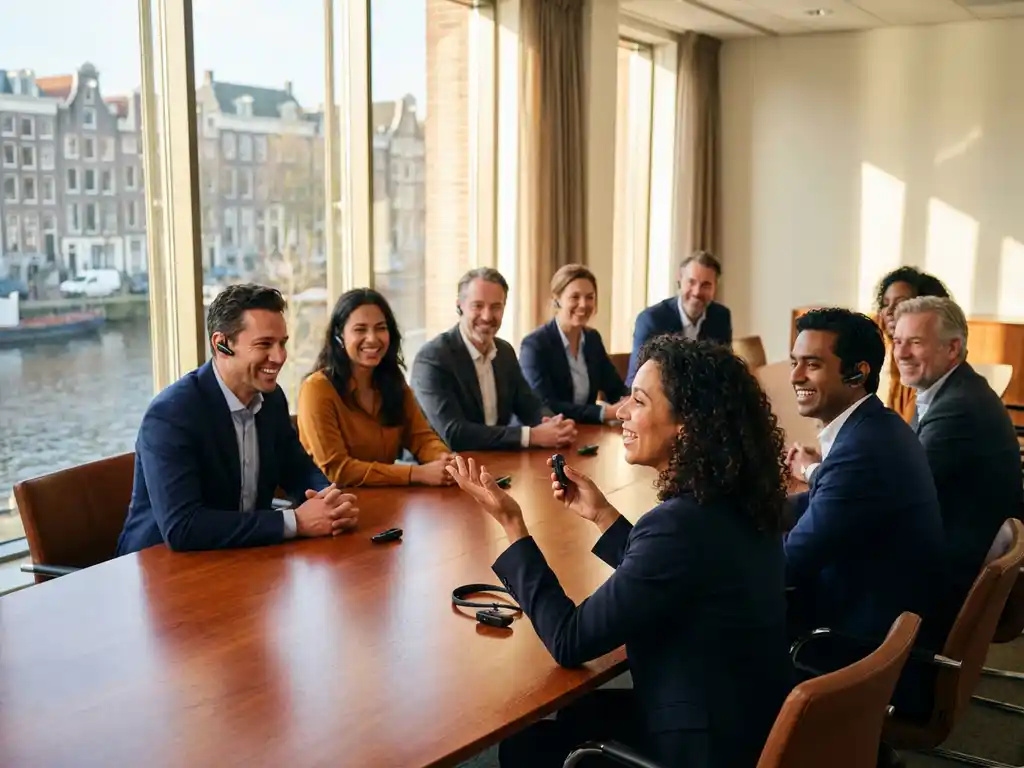
Simultaneous interpretation by professional interpreters using wireless headset systems works best for formal presentations and large group sessions, while consecutive interpretation is more suitable for smaller discussions, Q&A sessions, and interactive workshops where real-time dialogue is essential.
Professional simultaneous interpreters provide real-time translation through specialized equipment, allowing participants to hear presentations in their preferred language without disrupting the flow of content. This method works particularly well for keynote speeches, formal presentations, and structured sessions where one person speaks for extended periods.
Consecutive interpretation involves interpreters translating after the speaker pauses, making it ideal for interactive discussions, brainstorming sessions, and smaller group activities. While this method takes longer, it ensures accuracy and allows for clarification when complex concepts are discussed.
Document translation services should complement live interpretation. Provide translated versions of essential materials like agendas, presentation slides, and key handouts. Consider offering translated summaries of important decisions or action items at the end of each session to ensure all participants understand the outcomes and next steps.
How do you facilitate networking when attendees speak different languages?
Facilitate multilingual networking by creating structured interaction opportunities with visual aids, organizing language-paired activities where bilingual participants can bridge communication gaps, and providing conversation-starter cards with key phrases translated into multiple languages to encourage cross-cultural connections.
Structured networking activities work better than unstructured social time for multilingual groups. Design activities that rely on visual elements, demonstrations, or hands-on collaboration rather than purely verbal communication. Team challenges, collaborative problem-solving exercises, and interactive workshops allow participants to connect through shared tasks rather than complex conversation.
Language buddy systems pair participants who share a common language or match those seeking to practice a particular language with native speakers. This creates natural mentorship opportunities while ensuring everyone has someone to turn to for translation assistance during informal interactions.
Technology can support networking through translation apps, digital business card exchanges, and multilingual event apps that allow participants to connect and communicate before, during, and after networking sessions. Professional incentive travel specialists provide guidance on recommended translation tools and ensure reliable internet connectivity for these solutions.
What technology solutions help overcome language barriers during retreats?
Real-time translation apps like Google Translate’s conversation mode, professional interpretation platforms such as Interprefy for live events, multilingual presentation software, and digital collaboration tools with built-in translation features provide comprehensive technology solutions for overcoming language barriers during corporate retreats.
Mobile translation applications offer immediate assistance for informal conversations and quick clarifications. Modern apps can translate speech in real time, making them valuable for spontaneous interactions during breaks, meals, and networking activities. However, these tools work best for simple communication and should not replace professional interpretation for important business discussions.
Professional interpretation platforms provide higher-quality solutions for formal sessions. These systems offer multiple language channels, recording capabilities, and integration with video-conferencing platforms for hybrid events. They require advance setup and professional operators but deliver superior accuracy for complex business content.
Collaborative digital platforms allow participants to contribute ideas, feedback, and questions in their preferred languages, with translation occurring within the platform. These tools are particularly valuable for brainstorming sessions, feedback collection, and follow-up activities where participants need time to formulate thoughtful responses.
Visual presentation technologies, including interactive whiteboards and real-time polling systems with multilingual interfaces, help communicate concepts that transcend language barriers. Charts, diagrams, and visual workflows often communicate more effectively than verbal explanations alone, supporting understanding across linguistic differences.
How DMC GO helps with overcoming language barriers at international corporate retreats
DMC GO provides comprehensive multilingual support solutions for international corporate retreats, ensuring seamless communication across diverse teams. Our services include:
• Professional interpreter coordination and equipment setup for simultaneous and consecutive translation
• Pre-event language assessment and material translation services
• Venue selection with appropriate technical capabilities for multilingual events
• Cultural sensitivity training and communication protocol development
• Technology integration including translation apps and multilingual presentation systems
Our experienced team understands the complexities of international corporate communication and works closely with professional translation services, venues equipped for multilingual events, and technology providers to create inclusive retreat experiences. We handle all logistical aspects of language support, from initial planning through on-site coordination, allowing you to focus on your retreat objectives while ensuring every participant can contribute meaningfully to discussions and activities. Contact our team to discuss how we can support your next multilingual corporate retreat and create an environment where language differences become opportunities for richer collaboration rather than barriers to success.