
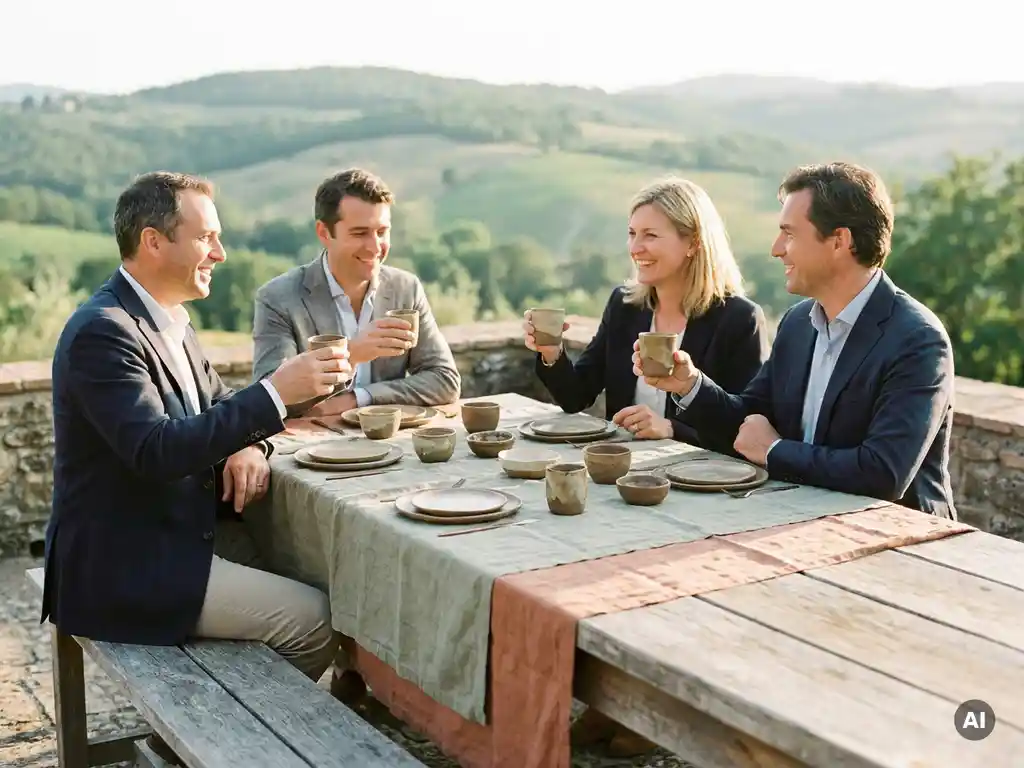
Slow MICE is a travel philosophy that prioritises depth over volume, replacing packed itineraries and back-to-back activities with fewer, more meaningful experiences that give participants time to genuinely connect with a destination, each other, and themselves. It is the incentive world’s answer to a growing fatigue with overscheduled programmes that leave attendees exhausted rather than energised. Below, we unpack what slow MICE actually means in practice and whether it is the right approach for your next incentive programme.
How does slow MICE differ from traditional incentive travel?
Slow MICE differs from traditional incentive travel in its fundamental measure of success. Where a conventional programme counts activities, venues, and highlights visited, a slow MICE programme measures the quality of engagement, the depth of cultural immersion, and the lasting impression left on participants. Traditional incentive travel tends to compress as much as possible into a short window; slow travel deliberately leaves space.
In a traditional incentive trip, a group might visit four cities in five days, attend a gala dinner, complete a team challenge, and tick off a landmark tour. The result is impressive on paper but often forgettable in memory. A slow MICE programme might centre the entire experience around one destination, one neighbourhood, or even one craft, allowing participants to genuinely absorb what they are experiencing rather than moving on before it has settled.
This is not about doing less for the sake of it. It is about doing fewer things with far greater intention. The shift is qualitative, not quantitative, and it reflects a broader change in how organisations think about incentive travel value.
What are the core principles of a slow MICE programme?
A slow MICE programme is built on three core principles: intentionality, immersion, sustainability, and pace. Every element of the programme is chosen because it serves a clear purpose, every experience is designed to connect participants with something real and local, and every decision considers the environmental and social impact of the group’s presence in a destination.
- Intentionality: Each activity is selected because it contributes to a clear emotional or professional outcome, whether that is team cohesion, personal renewal, or cultural appreciation. There are no filler sessions.
- Immersion: Participants spend meaningful time in one place, engaging with local artisans, chefs, communities, or landscapes rather than observing them from a bus window.
- Sustainability: Slow MICE naturally aligns with sustainable incentive travel because it reduces the carbon footprint of constant movement, supports local economies, and avoids the overtourism pressure of high-volume group tourism.
- Pace: Programmes include genuine downtime, allowing participants to process experiences, have unplanned conversations, and recharge rather than simply moving from one scheduled block to the next.
- Personalisation: Because slow programmes are not built around volume, there is more room to tailor experiences to the specific group, their interests, and the outcomes the organiser wants to achieve.
These principles make slow MICE particularly well suited to organisations that want their incentive investment to translate into something participants remember and talk about long after they return home.
What types of companies benefit most from slow incentive travel?
Companies with senior or high-performing talent pools, strong sustainability commitments, or a culture that values wellbeing over spectacle tend to benefit most from slow incentive travel. These are organisations where the people being rewarded have likely already experienced traditional luxury incentive trips and are looking for something that feels genuinely different.
Specifically, slow MICE tends to resonate strongly with:
- Professional services firms (legal, financial, consulting) where high-achieving individuals are accustomed to high-end travel but value authenticity and intellectual stimulation
- Technology companies with sustainability goals baked into their corporate identity, where a slow travel approach reinforces brand values
- Creative industries where inspiration and sensory experience are central to professional life and participants respond to depth over breadth
- Organisations undergoing cultural transformation where the incentive trip is also meant to build genuine team cohesion and trust, not just celebrate results
Smaller groups also benefit disproportionately from slow MICE. When you are designing for 15 to 40 people rather than 200, the economics and logistics of a more intimate, immersive programme become far more practical, and the impact per person is significantly higher.
Which destinations work best for a slow MICE experience?
The best destinations for a slow MICE experience are places with genuine cultural depth, natural character, and the infrastructure to support small, high-quality groups without overwhelming the local environment. The destination itself becomes the programme rather than simply the backdrop to it.
Within the Netherlands, several locations are exceptionally well suited to slow incentive travel:
- The Wadden Sea Islands (Texel, Vlieland, Terschelling) offer rare natural quiet, tidal landscapes, and a pace of life that immediately slows a group down in the best possible way
- Giethoorn provides a genuinely unique canal village setting where the absence of cars creates an atmosphere unlike anywhere else in Europe
- The Veluwe combines forest landscapes with historic estates and world-class museums, offering both outdoor and cultural immersion
- Maastricht delivers a boutique, cross-border European atmosphere with exceptional food, architecture, and a sense of place that rewards time spent rather than time rushed
Internationally, destinations like the Alentejo region of Portugal, the Dolomites in Italy, and the Scottish Highlands consistently deliver the combination of authenticity, beauty, and limited mass tourism that makes slow MICE genuinely transformative rather than simply quieter.
How do you measure the ROI of a slow incentive programme?
The ROI of a slow incentive programme is measured through participant retention, engagement scores, post-trip survey results, and qualitative feedback rather than the number of activities completed. Because slow MICE is designed to create lasting emotional impact, its return shows up in metrics that traditional programmes often miss entirely.
Practical ways to measure slow MICE ROI include:
- Pre- and post-surveys: Measuring changes in team cohesion, motivation, and sense of recognition before and after the programme
- Retention tracking: Monitoring whether participants who attended remain with the organisation over the following 12 to 18 months at higher rates than non-participants
- Qualitative storytelling: Capturing specific memories and moments participants associate with the trip, which reveals whether the experience created the depth of impression intended
- Engagement benchmarks: Comparing performance metrics for incentive winners in the months following the programme against baseline periods
It is also worth acknowledging that slow MICE often delivers a more favourable cost-per-impact ratio than traditional programmes. When a programme is built around depth rather than volume, spend is concentrated on fewer, higher-quality experiences rather than spread thinly across many. That concentration tends to produce stronger memories and stronger emotional associations with the reward.
Should your next incentive programme go slow?
Your next incentive programme should go slow if your goal is lasting emotional impact, genuine team connection, or alignment with sustainability values, and if your audience has moved beyond being impressed by volume alone. Slow MICE is not the right fit for every group or every objective, but for the right audience, it consistently outperforms traditional formats on the metrics that matter most.
Ask these questions before deciding:
- Has this group experienced multiple traditional incentive trips already?
- Is one of your goals to build genuine interpersonal trust rather than simply celebrate achievement?
- Does your organisation have sustainability commitments that your incentive programme should reflect?
- Are your participants likely to value depth of experience over breadth of activity?
If you answered yes to two or more of these, a slow travel incentive is worth serious consideration. The MICE trends shaping 2026 point clearly toward quality over quantity, and organisations that adopt this approach early tend to find that their incentive programmes become genuinely differentiating rather than simply expected.
How GO DMC can design your slow MICE programme
We specialise in building incentive programmes that trade spectacle for substance, and slow MICE sits naturally at the heart of what we do best. Whether you are looking to create an immersive experience in the Netherlands or curate a slow travel journey to an international destination, our team brings the local knowledge and logistical precision to make it seamless.
Here is how we support slow incentive travel from start to finish:
- Destination curation: We identify locations that have the cultural depth, natural character, and boutique infrastructure to support a genuinely immersive group experience
- Programme design: We build itineraries around meaningful moments rather than maximum activity, with intentional pacing and space for authentic connection
- Local partnerships: Through our network of trusted suppliers, we connect groups with artisans, chefs, guides, and communities who offer experiences unavailable to standard tour groups
- Sustainability integration: We align programme choices with your organisation’s environmental and social values, from accommodation selection to transport planning
- End-to-end logistics: From the first briefing to the final transfer home, we handle every detail so your participants can be fully present
If you are ready to explore what a slow incentive programme could look like for your team, we would love to talk. Learn more about our incentive services or find out who we are before reaching out. Get in touch with our team and let us start designing something your people will genuinely remember.