
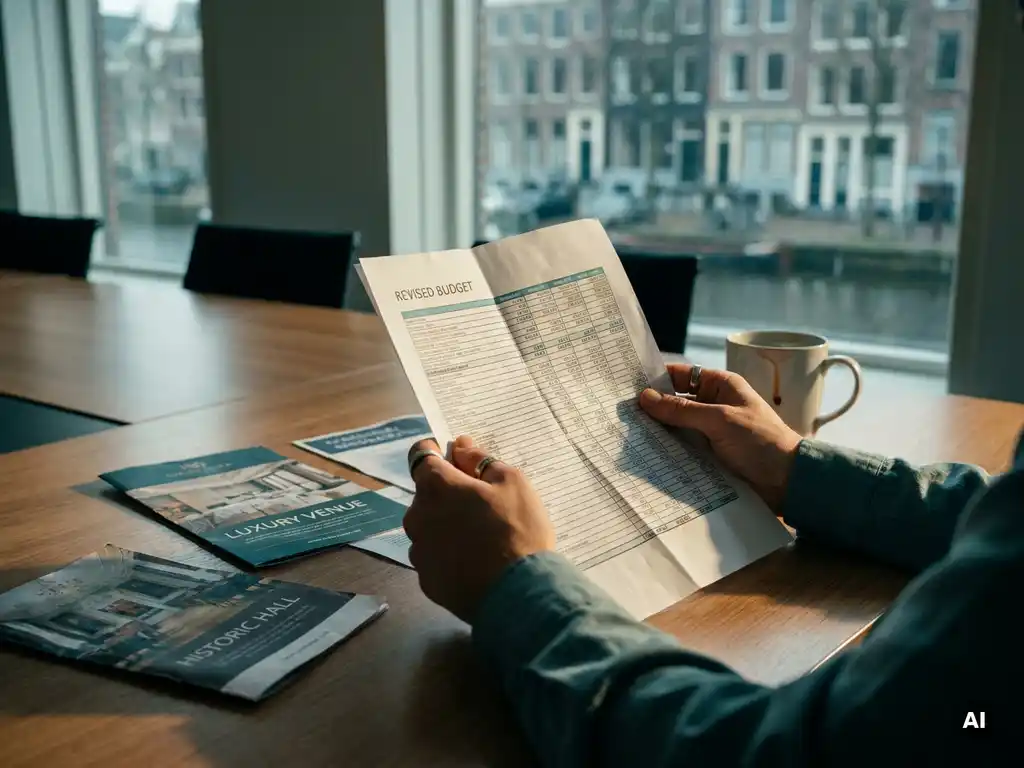
Budget cuts are stressful at the best of times. When they arrive days before your event is scheduled to go live, they can feel nothing short of catastrophic. Suppliers have been confirmed, venues are booked, and the program has been communicated to attendees. Yet the reality of corporate event planning in 2026 is that financial pressures can emerge without warning, and knowing how to respond quickly and strategically makes all the difference. Whether you are organizing a conference in Amsterdam, an incentive trip abroad, or a team event in Rotterdam, the principles for navigating a last-minute budget reduction are the same. Working with experienced DMC services can help, but there is also a great deal you can do yourself when the pressure is on.
Why last-minute budget cuts hit events hardest
Event budgets are not just numbers on a spreadsheet. By the time an event is a few weeks out, most of that budget has already been committed through signed contracts, deposits, and confirmed bookings. A last-minute cut does not simply mean spending less. It means finding savings within a structure that was never designed to be flexible at this stage.
The timing creates a compounding problem. Cancellation fees, non-refundable deposits, and minimum spend clauses all reduce the room to maneuver. At the same time, the event itself cannot simply be scaled down without some visible impact on the attendee experience. The challenge is to absorb the financial shock without letting it show on the day. That requires a calm, methodical approach rather than a reactive one.
Where to find savings without sacrificing impact
Not all event costs carry equal weight when it comes to the attendee experience. The first step is to separate the elements that define the event from those that support it behind the scenes. Catering upgrades, printed materials, decorative flourishes, and certain AV enhancements often fall into the second category and can be scaled back with minimal visible effect.
- Reduce printed collateral and shift to digital event guides or apps
- Simplify the catering format without reducing quality, for example, moving from a plated dinner to a high-quality standing reception
- Consolidate transport arrangements to reduce the number of vehicles or transfers
- Scale back on decorative elements that add cost but not substance to the program
The goal is to protect the moments that matter most. Keynote speakers, the core venue experience, and the quality of food and drink all leave lasting impressions. These are worth defending in the budget even when other lines are being trimmed.
How to renegotiate with suppliers under pressure
Renegotiation is uncomfortable, but most professional suppliers understand that budgets shift and would rather find a workable solution than lose a client relationship. The key is to approach conversations with honesty, speed, and a clear sense of what you are asking for.
Contact suppliers as early as possible once the cut is confirmed. Explain the situation directly and ask whether there are alternative packages, reduced-scope options, or payment flexibility available. Many venues and caterers have tiered offerings that were never presented at the initial quote stage. Some suppliers may also prefer to offer a credit toward a future event rather than process a partial refund, which can work in your favour if you have ongoing event activity.
It is also worth reviewing your contracts carefully before any conversation. Understanding which costs are genuinely fixed and which have flexibility gives you a much stronger position in the discussion. Never assume a line item is non-negotiable until you have actually asked.
Redesigning the event experience around the new budget
Once the savings have been identified and supplier conversations are underway, the focus shifts to redesigning the event so it feels intentional rather than reduced. This is where creative thinking becomes genuinely valuable.
A tighter budget often forces a sharper focus on what the event is actually trying to achieve. If the goal is connection and collaboration, a more intimate format may serve that purpose better than a large-scale production. If the goal is recognition and motivation, a well-executed dinner with a personal touch can outperform an elaborate program that feels stretched thin.
Consider restructuring the agenda to reduce time-intensive elements that carry high operational costs. Shorter breakout sessions, a consolidated venue footprint, or a revised schedule that eliminates one logistical layer can all reduce cost without reducing the quality of the experience. Attendees rarely notice what was planned and changed. They notice how the event makes them feel on the day.
Common mistakes that make budget cuts worse
The pressure of a last-minute cut can lead to decisions that create bigger problems down the line. One of the most common is cutting too deeply in one area to compensate for not touching another. Slashing the catering budget entirely to preserve an expensive speaker, for example, can leave attendees with a poor overall impression that overshadows the program itself.
Another frequent mistake is failing to communicate changes internally. If the event team, venue contact, and key stakeholders are not aligned on the revised scope, misunderstandings multiply quickly. Equally, over-communicating changes to attendees before they are necessary can create unnecessary concern about an event that will still deliver a strong experience.
- Avoid making cuts without a clear priority framework for what matters most
- Do not delay supplier conversations in the hope that the budget will be restored
- Resist the temptation to cut corners on health, safety, or accessibility provisions
- Never promise attendees a version of the event that the revised budget cannot deliver
Staying calm, communicating clearly, and making decisions based on attendee impact rather than line-item convenience will always produce better results than reactive cost-cutting.
How GO DMC helps when event budgets change
When budgets shift unexpectedly, having an experienced partner makes a significant difference. As a full-service DMC in the Netherlands with over 35 years of industry experience, we have navigated budget revisions at every stage of the event planning process. Our local knowledge across Amsterdam, Rotterdam, The Hague, Utrecht, and Maastricht means we know which suppliers offer genuine flexibility, which venues have alternative configurations, and where savings can be found without compromising the experience your attendees will remember.
- Rapid budget reallocation across venue, catering, transport, and program elements
- Direct supplier relationships that support honest, fast renegotiation
- Creative program redesign to align the event experience with the revised scope
- End-to-end coordination so nothing falls through the gaps during a stressful transition
We work as a true partner, not just a logistics provider. If your event budget has been cut and you need experienced support to navigate what comes next, get in touch with our team and we will help you find the best path forward.