
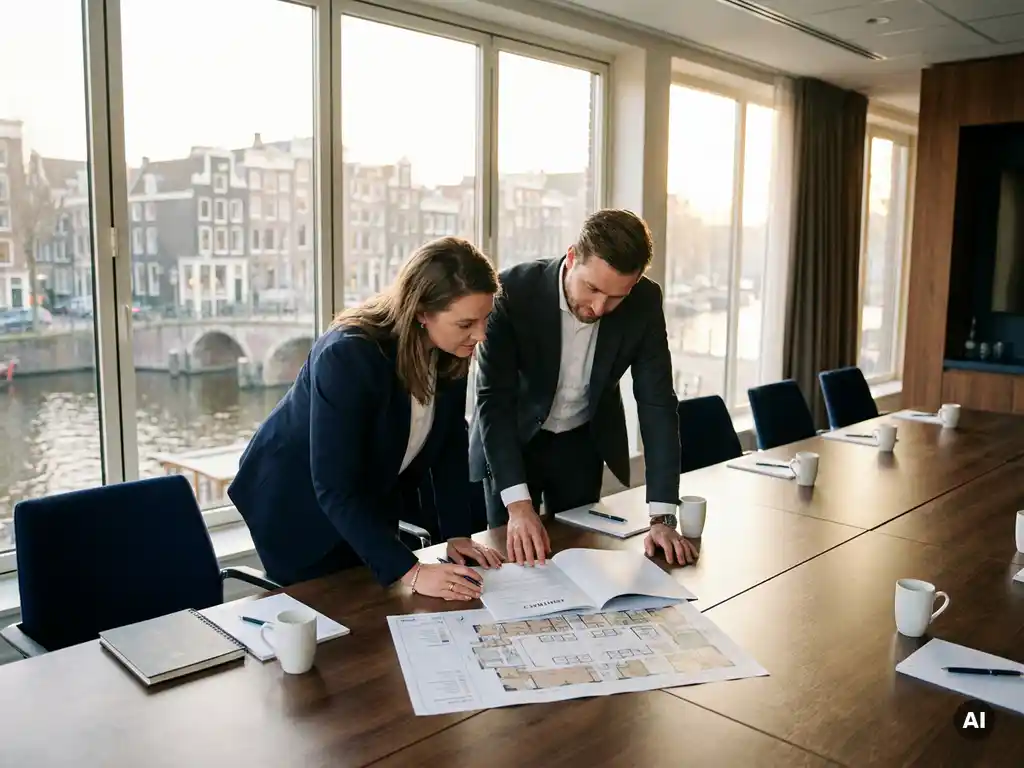
International event agencies increasingly find themselves navigating a fundamental tension: the pressure to deliver locally authentic, operationally flawless experiences while managing programs from thousands of kilometers away. In the context of MICE events in the Netherlands, this tension becomes especially pronounced. The Dutch market combines a sophisticated corporate culture, a dense network of world-class venues, and logistical nuances that reward deep local knowledge. Knowing when to bring in a local DMC Netherlands partner is not simply a matter of convenience; it is a strategic decision that can determine whether a program succeeds or falls short of client expectations.
For many international agencies, the default assumption is that strong project management skills transfer across borders. In practice, destination-specific variables, supplier relationships, municipal regulations, seasonal venue availability, cultural expectations around hospitality, create complexity that remote coordination struggles to absorb. The question is not whether a local DMC adds value, but at what point that value becomes indispensable.
What Drives International Agencies to Seek Local DMC Support
The decision to engage a destination management company rarely comes from a single pressure point. More often, it emerges from a combination of factors that accumulate as a program grows in complexity or stakes. Agencies working across multiple markets simultaneously are particularly vulnerable to gaps in local intelligence, gaps that only become visible once a program is already in motion.
Operational risk is one of the most consistent drivers. When an agency is managing supplier contracts, delegate logistics, and on-site contingencies in a market they do not operate in daily, the margin for error widens significantly. A local DMC absorbs much of that operational exposure by functioning as an embedded extension of the agency team, with real-time access to supplier networks and the authority to resolve issues before they escalate.
Key Scenarios Where a Local DMC Becomes Essential
Certain program characteristics reliably signal that local DMC support has moved from optional to necessary. Understanding these scenarios helps agencies make the hire-a-DMC decision proactively rather than reactively.
High-stakes programs with limited local knowledge
When a client’s program involves a flagship incentive, a major product launch, or a conference with senior leadership attendance, the tolerance for operational error drops to near zero. In these contexts, the agency’s credibility is directly tied to execution quality. A local DMC with established supplier relationships and venue access provides the reliability buffer that remote management cannot replicate.
Short lead times and compressed planning windows
The Netherlands is one of Europe’s most in-demand MICE destinations, meaning premium venues in Amsterdam, Rotterdam, and The Hague fill quickly. An agency without existing local relationships will struggle to secure first-choice options on compressed timelines. A local DMC with active supplier partnerships can navigate availability constraints and access inventory that is not publicly listed.
Programs requiring deep cultural or regulatory knowledge
Event planning in the Netherlands involves navigating specific municipal permit requirements, noise ordinances, and catering regulations that vary by city and venue type. Cultural expectations around program flow, hospitality standards, and delegate experience also differ meaningfully from other European markets. These are not details that can be researched away; they require embedded, current knowledge.
What Distinguishes a Strategic DMC Partner from a Vendor
The distinction between a vendor and a strategic partner is not primarily about the services offered; it is about the relationship structure and the depth of involvement. A vendor executes against a brief. A strategic DMC partner contributes to shaping the brief itself, bringing destination intelligence and creative programming ideas that improve the client’s outcome before the planning process fully begins.
Strategic DMC partnerships are characterized by proactive communication, transparency around supplier relationships, and a willingness to push back constructively when a proposed approach carries unnecessary risk. Agencies should look for DMC partners who ask questions about program objectives rather than simply confirming logistics. The best DMC partnerships function as a genuine extension of the agency’s planning team, with aligned incentives and shared accountability for the program’s success.
How the Netherlands Market Shapes DMC Selection Criteria
The Netherlands presents a distinctive set of selection criteria that differ from other European MICE destinations. The country’s geographic compactness means that multi-city itineraries are logistically feasible within a single program, but they require careful coordination across different municipal contexts. Amsterdam’s historic canal district, Rotterdam’s modernist architecture, and The Hague’s institutional gravitas each create different programming opportunities and operational considerations.
Supplier market depth is another Netherlands-specific factor. The Dutch MICE ecosystem includes a strong network of specialized AV providers, catering companies with international certification, and transport operators experienced with large group logistics. A local DMC’s ability to navigate this ecosystem, and to leverage preferred supplier rates built through consistent volume, directly affects both program quality and cost efficiency. Agencies evaluating DMC partners for event planning Netherlands should assess supplier relationship depth as a primary criterion, not an afterthought.
A Framework for Deciding When to Bring in a Local DMC
Rather than treating the DMC decision as binary, agencies benefit from applying a structured assessment across four dimensions:
- Program complexity: Does the itinerary involve multiple venues, cities, or logistical dependencies that require real-time local coordination?
- Destination familiarity: Does the agency have existing, current supplier relationships in the Netherlands, or would the program rely on cold outreach?
- Client risk tolerance: How sensitive is the client to operational disruption, and what is the reputational exposure if execution falls short?
- Lead time: Is the planning window long enough for remote management to close knowledge gaps, or does compressed timing make local expertise non-negotiable?
When two or more of these dimensions indicate high complexity or risk, the case for engaging a local DMC Netherlands becomes compelling. When three or more apply simultaneously, it is typically the most cost-effective and risk-appropriate decision an agency can make, even accounting for the additional coordination layer. DMC partnership costs vary depending on program scope, delegate numbers, and service requirements, so the financial case is best evaluated against the specific program brief rather than in the abstract.
How GO DMC Supports International Event Agencies in the Netherlands
GO DMC operates as a strategic DMC partner for international event agencies bringing programs to the Netherlands, offering the local depth and operational infrastructure that transforms complex briefs into seamless experiences. Rather than functioning as a transactional supplier, GO DMC embeds itself in the agency’s planning process from the earliest stages, contributing destination intelligence, supplier access, and creative programming input that shapes better outcomes.
For agencies evaluating a DMC partnership in the Netherlands, GO DMC’s support covers the full program lifecycle:
- Venue sourcing and negotiation across Amsterdam, Rotterdam, The Hague, and beyond, including access to exclusive and off-market spaces
- End-to-end logistics management for delegate transport, accommodation coordination, and on-site operations
- Bespoke incentive programming and cultural experiences that reflect the authentic character of Dutch destinations
- Regulatory and permit navigation across municipal contexts, reducing compliance risk for the agency and client
- Real-time on-site support from an experienced local team, providing the operational continuity that remote management cannot deliver
Packages and pricing depend on program scope, group size, and service requirements; the best starting point is a direct conversation about your specific brief. To explore how GO DMC can support your next program in the Netherlands, get in touch with the GO DMC team and outline what you are planning.