
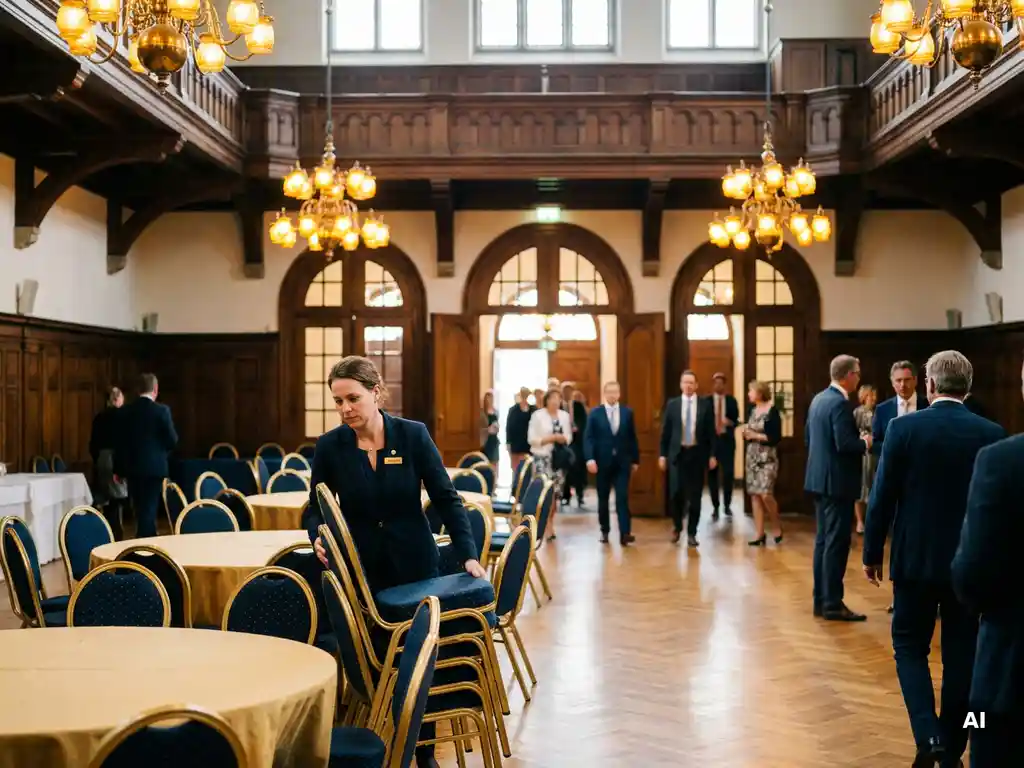
Planning a conference is rarely a perfectly linear process. Even the most meticulously prepared events can face a sudden surge in registrations, whether driven by a high-profile speaker announcement, last-minute corporate sign-ups, or simply stronger-than-expected demand. When that happens, the pressure falls on every layer of the operation at once. For anyone working in corporate event planning or relying on DMC services to deliver a seamless experience, knowing how to respond quickly and confidently is what separates a memorable event from a logistical crisis.
The good news is that a sudden increase in attendee numbers, while stressful, is a manageable challenge when you have the right protocols and partners in place. The key is recognizing the signals early, adapting intelligently, and communicating clearly throughout. Here is a practical guide to doing exactly that.
Early warning signs that attendance will exceed expectations
The first step in managing an attendance surge is spotting it before it becomes a problem. Registration data rarely lies, and the pattern usually emerges well before the event date if you know what to look for.
A spike in registrations following a speaker announcement or media mention is one of the clearest indicators. Similarly, a steady acceleration in sign-ups in the final two to three weeks before the event, rather than the typical plateau, often signals that demand is outpacing your original projections. Waiting list requests and direct enquiries asking whether capacity is still available are also strong signals worth taking seriously.
Set up automated alerts in your registration platform so that thresholds trigger a review. If registrations hit 80% of capacity with more than three weeks to go, that is the moment to start contingency planning, not when you hit 100%.
Venue capacity and layout adjustments that actually work
Once an attendance surge is confirmed, the venue becomes the most urgent variable to address. Capacity is not always a fixed ceiling, and experienced venue managers often have more flexibility than the original floor plan suggests.
Start by speaking directly with the venue coordinator about overflow options. Many conference venues, particularly in cities like Amsterdam, Rotterdam, and The Hague, have adjacent breakout rooms or satellite spaces that can be converted into live-stream viewing areas for overflow attendees. This keeps the experience cohesive without compromising the main room’s setup.
Layout reconfiguration is another practical lever. Moving from a classroom-style arrangement to a theatre-style setup can increase seating capacity significantly without requiring additional space. If the programme includes workshops or breakout sessions, splitting these into additional time slots rather than larger groups preserves quality while accommodating more people.
Catering, transport, and accommodation under pressure
Scaling logistics under time pressure is where many events stumble. Catering, transport, and accommodation all require lead time, and suppliers need clear, updated numbers as early as possible.
- Contact your catering supplier immediately with revised headcount projections, even if the final number is not yet confirmed. A range is far more useful to them than silence.
- Review shuttle or coach arrangements and assess whether additional vehicles or departure slots are needed to avoid bottlenecks at arrival and departure points.
- Block additional hotel rooms at your contracted properties before they fill, even if this means holding rooms you may not ultimately need.
- Identify backup accommodation options within a reasonable distance of the venue in case your primary hotel block reaches its limit.
Supplier relationships matter enormously in these moments. Partners who know your event and trust your organization are far more likely to flex on short notice than those working from a cold contract.
Communication protocols when the plan changes mid-event
Clear communication is the foundation of managing any unexpected change, and an attendance surge is no exception. The challenge is that information needs to flow in multiple directions simultaneously: to your internal team, to suppliers, to the venue, and to attendees themselves.
Internally, designate a single point of contact responsible for coordinating all updates. When everyone is making calls and sending messages independently, decisions get duplicated or contradicted. One person holds the overview; others execute within their area.
For attendees, transparency builds trust. If seating arrangements have changed, if a session has moved to a larger room, or if registration for a specific workshop is now full, communicate this proactively rather than letting people discover it on arrival. A short, direct email or app notification sent 48 to 72 hours before the event manages expectations and reduces on-site friction considerably.
Why a destination management partner makes the difference
When attendee numbers climb unexpectedly, the value of having an experienced destination management partner becomes immediately clear. A strong DMC Netherlands partner does not simply execute a fixed brief; they bring local supplier networks, contingency thinking, and rapid problem-solving capacity that an in-house team working in an unfamiliar destination simply cannot replicate.
Local knowledge is particularly valuable under pressure. Knowing which venues have genuine overflow capacity, which hotels will prioritize your block, and which transport providers can mobilize additional vehicles at short notice requires relationships built over years, not a quick internet search. That kind of embedded expertise is what turns a potential crisis into a managed adjustment.
The broader principle here is that resilience in event planning is not about avoiding surprises. It is about having the infrastructure, the relationships, and the decision-making clarity to respond well when surprises arrive.
How GO DMC helps when your conference grows beyond the original plan
We understand that conference planning rarely goes exactly as projected, and an unexpected surge in attendance is one of the most common pressure points our clients face. At GO DMC, we bring over 35 years of destination management experience across the Netherlands to exactly these moments, combining deep local supplier relationships with the kind of rapid, coordinated response that complex events demand.
- We maintain active relationships with venues, hotels, and transport providers across Amsterdam, Rotterdam, The Hague, Utrecht, and Maastricht, giving us real flexibility when numbers shift.
- Our team handles supplier renegotiation, layout adjustments, and logistics scaling on your behalf, so your internal team can stay focused on the programme.
- We coordinate attendee communications to ensure every change is conveyed clearly, professionally, and on time.
Whether your event grows by 20 attendees or 200, our role is to absorb the complexity so the experience remains seamless for everyone in the room. If you are planning a conference in the Netherlands and want a partner who can handle the unexpected with confidence, get in touch with our team today.