
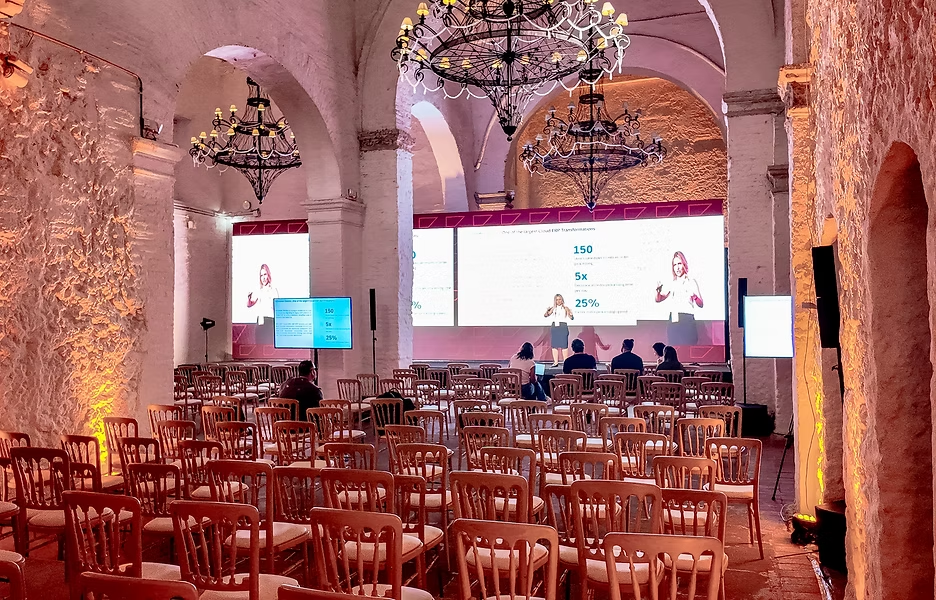
Organizing a corporate event in the Netherlands as an international company sounds straightforward until you realize how much depends on knowing the country from the inside. Venue booking systems, local supplier networks, permit requirements, and attendee expectations all carry nuances that are hard to navigate without prior experience. This guide walks you through exactly how to approach the process, from the groundwork you need to lay before you book anything to the moment your attendees step into the room.
Whether you are planning a conference in Amsterdam, an executive retreat in Maastricht, or a product launch in Rotterdam, the steps below will help you avoid the most common pitfalls and build an event that runs smoothly from arrival to closing dinner.
What you need before planning your Dutch corporate event
Before you open a venue search or contact a single supplier, establish the foundational decisions that will shape every choice that follows. Skipping this stage is the single most common reason international planners end up with a fragmented event that does not hold together.
Start by defining the following clearly and in writing:
- The purpose of the event and the outcome you want attendees to leave with
- The number of attendees and their countries of origin
- Your overall budget range and how it is allocated across venue, catering, transport, and programming
- Your preferred dates and any hard constraints around travel windows
With these decisions locked in, you have a brief that any Dutch venue, supplier, or DMC services partner can work from immediately. Without it, you will spend weeks in back-and-forth conversations that lead nowhere. Also confirm at this stage whether your event falls within a busy Dutch calendar period. Major trade fairs, public holidays, and events like Formula 1 at Zandvoort can compress hotel availability and drive up costs significantly, so checking the Dutch events calendar early saves real money.
Choose the right Dutch city and venue for your event
Select your location based on the character of the event, not just on which city is most familiar to you. Each major Dutch city offers a genuinely different atmosphere and infrastructure, and matching the two is one of the most important decisions you will make.
Amsterdam works well for large international conferences and events where cultural access and airport connectivity are priorities. Rotterdam suits innovation-focused gatherings and companies that want modern architecture and a forward-thinking backdrop. The Hague carries diplomatic prestige and is particularly well suited to high-level meetings, government-adjacent events, and gatherings that benefit from a sense of gravitas. Utrecht offers central accessibility and historic charm, making it ideal for mid-sized corporate meetings. Maastricht brings a boutique, cross-border feel that suits luxury incentive programs and smaller executive events.
Once you have chosen your city, shortlist venues based on three practical criteria: capacity with room to breathe, technical infrastructure including AV and connectivity, and catering flexibility. Dutch venues vary widely in what they include in their base hire and what they charge as extras. Request detailed proposals rather than headline rates, and ask specifically about exclusivity, setup time access, and noise restrictions, particularly in historic buildings where sound regulations can be strict.
Navigate Dutch permits, suppliers, and logistics
This is where international planners most often underestimate the complexity. The Netherlands has clear regulatory frameworks for events, but navigating them requires knowing which authority to approach and in what order.
For events in public spaces or those involving amplified sound, outdoor structures, or catering to the public, you will need permits from the local municipality. In Amsterdam this is the Gemeente Amsterdam, in The Hague it is Gemeente Den Haag, and so on. Lead times for permit approval typically run several weeks, and submitting incomplete applications resets the clock. Build at least six to eight weeks of buffer into your timeline for any event with a public-facing element.
For supplier selection, work through a structured process:
- Identify the categories you need: catering, AV, transport, floral, security, and entertainment
- Request a minimum of two to three quotes per category from Dutch-based suppliers
- Verify that each supplier carries the appropriate liability insurance and VAT registration
- Confirm delivery and setup windows in writing before signing any contract
Logistics in the Netherlands are generally efficient, but urban delivery restrictions in city centres, particularly in Amsterdam and Utrecht, mean that supplier vehicles cannot always access venues at all hours. Confirm loading bay access and time windows with your venue before you finalize supplier contracts, or you will face last-minute scrambles on event day.
Build a program that works for international attendees
A program that works on paper in your home market may not translate well when your attendees are arriving from multiple time zones, speaking different first languages, and navigating an unfamiliar country. Design your agenda with these realities built in from the start.
Schedule the first session no earlier than mid-morning on arrival day to absorb flight delays and give attendees time to check in and orient themselves. Build in more transition time than you think you need between sessions, particularly if attendees are moving between buildings or venues. The Netherlands is very walkable, but unfamiliar cities slow people down.
Cultural programming adds genuine value when it is integrated rather than bolted on. A canal boat dinner, a visit to a working Dutch windmill, or a private tasting at a local jenever distillery gives international attendees something they cannot replicate at home and creates shared memories that extend the impact of the event. Work with local cultural institutions early, as popular experiences book out months in advance, especially during spring and summer.
Ensure all signage, printed materials, and digital communications are available in English as a minimum, with additional languages added based on your attendee mix. Dutch venues and suppliers are generally very comfortable working in English, but assumptions in either direction create friction.
Work with a local DMC to close knowledge gaps
Even with thorough preparation, the gap between planning an event from abroad and executing it on the ground in the Netherlands is significant. Local knowledge is not just useful; it is often the difference between an event that runs smoothly and one that spends its energy managing avoidable problems.
A destination management company with genuine roots in the Dutch market brings supplier relationships, permit experience, venue access, and on-the-ground coordination that takes years to build independently. When evaluating a DMC partner, ask specifically about their experience with events of your size and type, their supplier network in your chosen city, and how they handle contingencies when something goes wrong on the day.
Engage your DMC partner early, ideally before you have committed to a venue, so they can shape decisions rather than inherit them. The best DMC relationships work as a genuine planning partnership, with the local team contributing insight at every stage rather than simply executing a brief handed to them at the end.
How GO DMC helps you organize corporate events in the Netherlands
We bring over 35 years of experience organizing corporate events across the Netherlands, and we work as a hands-on partner from the earliest planning stages through to post-event wrap-up. Our team covers Amsterdam, Rotterdam, The Hague, Utrecht, Maastricht, and beyond, with deep supplier relationships and local authority contacts that make the logistical and regulatory side of event planning significantly faster and less stressful for international clients.
Here is what working with us looks like in practice:
- We handle venue sourcing, permit applications, and supplier coordination under one roof, so you deal with one point of contact rather than dozens
- Our incentive and cultural programming team builds attendee experiences that reflect genuine Dutch culture, not generic tourist itineraries
- We provide on-site coordination on event day, managing logistics so your team can focus on your attendees
- Our network spans the full Netherlands, meaning we can deliver consistent quality whether your event is in a Rotterdam waterfront venue or a Maastricht historic mansion
If you are planning a corporate event in the Netherlands and want a local partner who knows the market from the inside, get in touch with our team. We are ready to turn your brief into a program that delivers.