
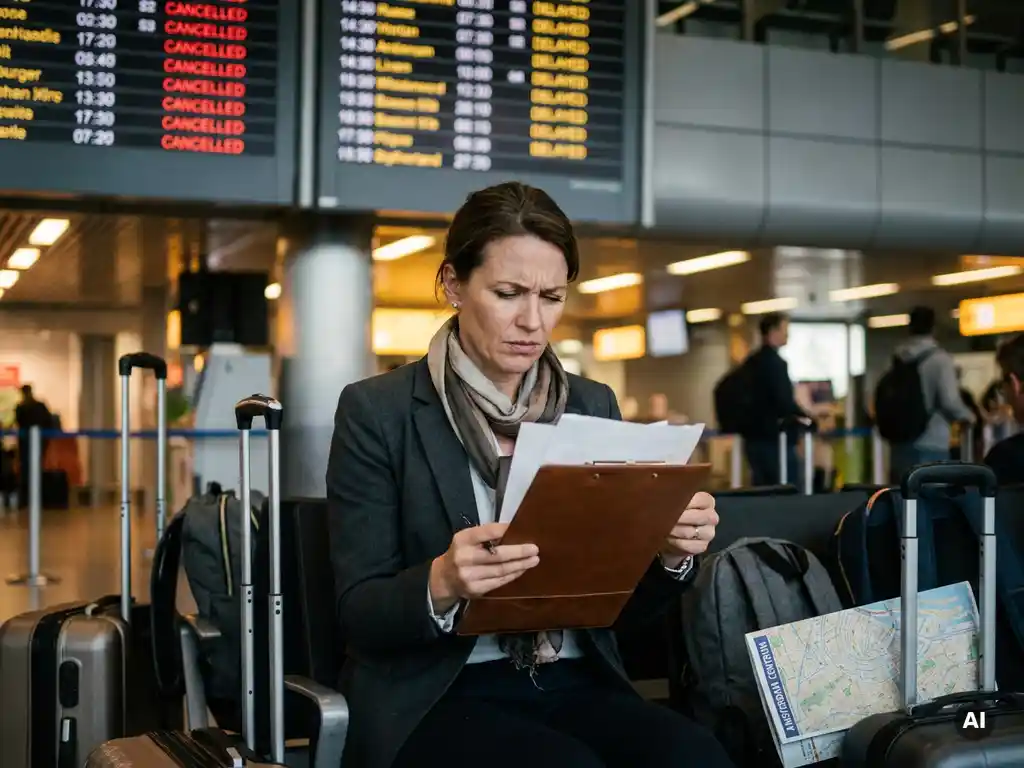
Flight disruptions are one of the most unpredictable variables in corporate event planning. A delayed connection in Frankfurt, a cancelled flight out of Heathrow, or a sudden airspace closure can unravel weeks of careful preparation in a matter of hours. For companies organizing conferences, incentive programs, or executive retreats in the Netherlands, the stakes are especially high. Attendees traveling from across Europe and beyond expect a seamless experience from the moment they leave home. Understanding how to respond quickly and strategically when travel goes wrong is no longer optional. It is a core competency for any organization that takes its events seriously.
The good news is that flight disruptions, while unavoidable, are manageable. With the right preparation, clear protocols, and trusted destination management partners, corporate travel teams can absorb significant disruptions without derailing the event itself. The sections below walk through every stage of the process, from understanding the real cost of disruptions to building a policy that protects future programs.
The hidden cost of flight disruptions on corporate events
The most obvious cost of a flight disruption is the rebooking fee or the missed hotel night. But the real financial and reputational damage runs much deeper. When a keynote speaker misses the opening session, or when a VIP group arrives eight hours late to a gala dinner, the impact on the event experience is difficult to quantify and even harder to recover from.
Consider the ripple effects: ground transportation that waited and was never used, catering that was prepared for a full group, venue staff on overtime, and a program schedule that collapses like dominoes. For large-scale MICE events, these indirect costs can easily exceed the direct rebooking expenses. Beyond the financial dimension, there is also the human element. Travelers stuck in airports are stressed and fatigued, which affects their engagement and performance once they finally arrive. Recognizing the full scope of what flight disruptions cost is the first step toward treating contingency planning as a genuine investment rather than an afterthought.
Building a travel contingency plan before disruptions hit
A solid contingency plan is built before anyone boards a plane, not after the disruption has already happened. The foundation of any effective plan is a clear understanding of which travelers are most critical to the event and which legs of the journey carry the highest risk.
Start by mapping every attendee’s travel itinerary and identifying single points of failure. A speaker with only one flight option into Amsterdam Schiphol on the morning of the event is a significant vulnerability. Where possible, build in buffer time by encouraging key participants to arrive the day before. Establish clear communication channels in advance so that every traveler knows exactly who to contact if something goes wrong. Designate a travel coordinator or on-site logistics contact who has the authority to make rebooking decisions quickly without needing to escalate through layers of approval.
- Map all attendee itineraries and flag high-risk single-connection routes
- Encourage critical speakers and VIPs to arrive one day early
- Assign a dedicated travel contact with decision-making authority
- Pre-agree alternative routing options with your travel management provider
The goal is to reduce the time between disruption and response to minutes, not hours.
How to rebook and reroute corporate travelers quickly
Speed is everything when a flight is cancelled or significantly delayed. The travelers who get rebooked first are almost always the ones whose coordinators act immediately, before the airline’s rebooking queues fill up.
The first step is to contact the airline directly through a corporate account or travel management company, rather than relying on the standard passenger helpline. Corporate accounts typically have access to priority rebooking support. Simultaneously, explore alternative routing options. If the direct flight from London to Amsterdam is cancelled, a connection via Brussels or a train from Paris might get the traveler to their destination faster than waiting for the next available direct flight.
For groups of travelers, coordinate rebooking centrally rather than letting individuals manage their own arrangements. This prevents a situation where some attendees are rebooked onto the same limited seats while others are left stranded. Keep a live shared document or communication thread that tracks every traveler’s current status, revised arrival time, and any updated ground transportation needs. Real-time visibility across the team is what separates a controlled response from a chaotic one.
Keeping your event program intact despite travel chaos
Even with the best rebooking efforts, some attendees will arrive late. The question is how to protect the event experience for everyone else while accommodating those who are delayed.
Build flexibility into the program structure from the outset. Networking sessions, breakout workshops, and social elements can often absorb a delay more gracefully than a rigid main stage schedule. If a key speaker is delayed, consider whether a prerecorded video introduction or a brief panel discussion can fill the gap without making the disruption visible to the audience. For smaller executive gatherings, a simple schedule adjustment communicated clearly and confidently can preserve the atmosphere without drawing attention to the problem.
On-site coordination is equally important. Ground transportation providers need to be updated in real time so that airport transfers are rescheduled rather than cancelled. Hotel reception teams should be briefed on late arrivals so that check-in is smooth regardless of the hour. The event experience does not begin when the welcome dinner starts. It begins the moment a traveler lands, and every touchpoint matters.
What to include in your corporate travel disruption policy
A formal travel disruption policy gives your team a clear framework to act from, rather than improvising under pressure. It also sets expectations for travelers and ensures consistent decision-making across different events and destinations.
At a minimum, the policy should cover the following areas:
- Rebooking authority: who can approve alternative flights, upgraded class, or additional nights
- Expense thresholds: what costs are pre-approved without individual sign-off
- Communication protocols: how and when travelers should report disruptions and to whom
- Duty of care obligations: what support the company provides to stranded travelers
The policy should also specify how disruption costs are tracked and reported so that future events can be budgeted more accurately. Review the policy after every major event and update it based on what actually happened. A disruption policy that reflects real experience is far more valuable than one built entirely on hypothetical scenarios.
How GO DMC helps when corporate travel goes off course
Managing flight disruptions while simultaneously running a high-profile event is an enormous operational challenge. That is where we come in. At GO DMC, we provide end-to-end destination management services across the Netherlands, and our role extends well beyond venue selection and program design. When travel disruptions occur, our on-the-ground teams in Amsterdam, Rotterdam, The Hague, Utrecht, and Maastricht respond immediately to protect the event experience for every attendee.
Here is how we support clients when disruptions hit:
- Real-time coordination with ground transportation providers to reroute transfers as arrival times change
- Direct communication with hotels and venues to adjust timings, catering, and staffing without impacting quality
- On-site program flexibility built into every event design so that delays do not create visible gaps
- A dedicated local contact available throughout the event who has the authority and the relationships to act fast
With more than 35 years of experience in the hospitality and events industry, we understand that the moments that test an event are also the moments that define it. If you are planning a corporate event in the Netherlands and want a partner who is ready for anything, reach out to our team to discuss how we can support your program from the first itinerary to the final transfer.