
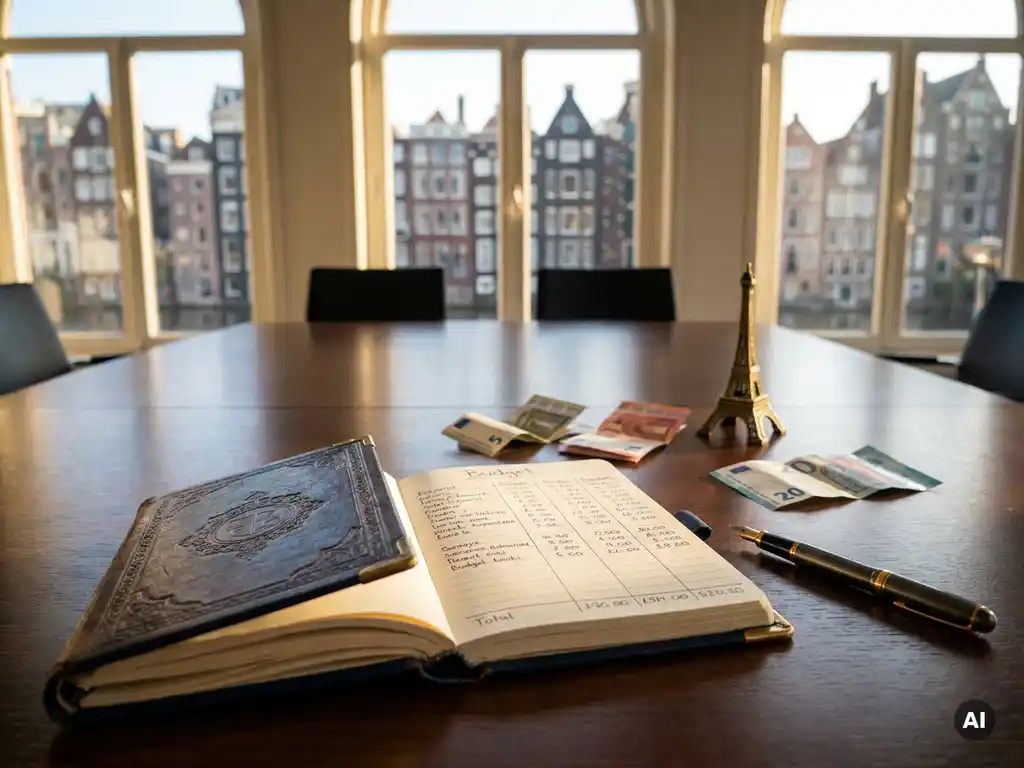
Planning an international conference in Europe is an exciting undertaking, but without a realistic budget in place from the start, even the most well-intentioned event can run into serious trouble. Whether you are organizing a leadership summit in Amsterdam, a product launch in Rotterdam, or an executive retreat in Maastricht, the financial framework you set early on will shape every decision that follows. Getting that framework right requires more than a rough estimate. It demands a structured approach to event planning that accounts for complexity, local market conditions, and the unexpected.
The good news is that building a solid conference budget is entirely achievable when you know which cost categories to prioritize, which mistakes to avoid, and when to bring in specialist support. This guide walks through each of those areas so your next business event in Europe starts on the right financial footing.
Key cost categories every conference budget must include
A well-structured conference budget leaves no major expense category unaccounted for. The most common reason budgets fall apart is not overspending in one area but failing to anticipate entire categories of cost altogether.
Every international conference budget should account for the following core areas:
- Venue hire and technical production including AV equipment, staging, lighting, and on-site technical staff
- Accommodation and room blocks for speakers, delegates, and your own organizing team
- Catering and hospitality covering coffee breaks, lunches, gala dinners, and welcome receptions
- Transportation and transfers from airports and hotels to the venue and any off-site activities
Beyond these foundations, do not overlook speaker fees and travel costs, event technology platforms, branding and print materials, security, and interpretation or translation services for multilingual audiences. Each of these can represent a meaningful share of the total spend, particularly for high-profile international gatherings.
How destination choice drives your overall budget
The city you choose for your conference has a direct and significant impact on your total costs. Venue hire rates, hotel pricing, catering standards, and supplier fees all vary considerably across European destinations, and understanding those differences early gives you far more flexibility during the planning process.
Major cities like Amsterdam and London tend to command premium rates for both venues and accommodation, particularly during peak seasons and around major industry events. Cities like Utrecht, Maastricht, or secondary European capitals can offer comparable quality at more accessible price points, while also providing a distinctive atmosphere that enhances the delegate experience.
Destination choice also affects logistical costs. A city with excellent international flight connections reduces delegate travel expenses and simplifies ground transportation planning. Proximity to multiple hotels of different categories gives you more flexibility when managing room blocks across varying delegate budgets. The local supplier ecosystem matters too. Destinations with a mature MICE infrastructure typically offer more competitive rates and a wider choice of trusted vendors than emerging event cities.
Common budget mistakes that derail conference planning
Even experienced event planners encounter budget problems when organizing international conferences. Most of these challenges are predictable and avoidable with the right approach.
One of the most frequent mistakes is underestimating the cost of technical production. AV, staging, and live-streaming capabilities are often far more expensive than initial quotes suggest, especially when complex requirements emerge closer to the event date. Locking in detailed technical specifications early and getting comprehensive quotes from multiple suppliers protects against this.
Another common error is treating currency fluctuation as a minor concern. When contracting with suppliers across multiple European countries or converting budgets from a non-euro currency, exchange rate movements can erode your budget meaningfully over a planning cycle of six to twelve months. Building in a buffer for currency risk is a practical safeguard, not overcaution.
Finally, many planners underestimate the administrative and coordination costs associated with international events. Visa support for speakers, multilingual communication, cross-border logistics, and compliance with local regulations all require time and often specialist expertise. These are real costs that belong in the budget from day one.
How to build a contingency fund into your event budget
A contingency fund is not a sign of poor planning. It is a mark of professional event planning discipline. For international conferences in Europe, a contingency allocation of between 10% and 15% of the total budget is a widely accepted benchmark, with larger or more complex events warranting the higher end of that range.
The contingency fund should be treated as a structured reserve rather than a general overflow account. Allocate it specifically for genuinely unforeseen costs such as last-minute venue changes, supplier failures, weather-related disruptions to outdoor elements, or unexpected delegate number changes that affect catering and room blocks.
One practical approach is to separate your contingency into two layers. The first covers operational surprises that your team can resolve internally. The second is held for force majeure situations or significant scope changes that require renegotiation with suppliers. Keeping these distinct makes it easier to track how and why the reserve is being used and helps you report transparently to stakeholders throughout the planning process.
When to bring in a destination management company
Knowing when specialist support adds genuine value is itself a strategic decision. For international conferences in Europe, a destination management company (DMC) becomes particularly valuable when the event involves multiple cities or venues, a high volume of international delegates, complex logistics, or a destination where your team lacks established supplier relationships.
A DMC brings local market knowledge that directly affects your budget accuracy. They know current venue rates, understand seasonal pricing patterns, and have existing relationships with suppliers that can translate into better terms and more reliable service. This local intelligence is difficult to replicate through remote research alone, particularly for destinations where the MICE market operates through established networks rather than public rate cards.
From a budget perspective, engaging a DMC early in the planning process often reduces overall costs rather than adding to them. Their supplier relationships, volume buying power, and ability to identify cost-saving alternatives without compromising quality can offset their management fees many times over. The key is involving them at the brief stage, not after the initial budget has already been set.
How GO DMC supports international conference budgeting
We understand that a well-planned budget is the foundation of a successful event. At GO DMC, we work alongside international organizers from the earliest stages of conference planning to build financial frameworks that are both realistic and resilient. Our approach combines 35 years of on-the-ground expertise across the Netherlands with a trusted network of venues, suppliers, and destination partners that gives our clients genuine budget confidence.
Here is what working with us looks like in practice:
- Destination consultation to match your event objectives with the right city, venue, and supplier ecosystem across Amsterdam, Rotterdam, The Hague, Utrecht, and Maastricht
- Transparent budget structuring that covers all cost categories from venue and catering to transportation, technical production, and contingency planning
- Supplier negotiation and management leveraging our established relationships to secure competitive terms without compromising on quality
- End-to-end coordination so your team can focus on the strategic and content elements of the conference while we handle the operational detail
If you are planning an international conference in Europe and want to build your budget on a solid foundation, we would love to help. Reach out to our team and let us bring the local expertise and precision planning your event deserves.