
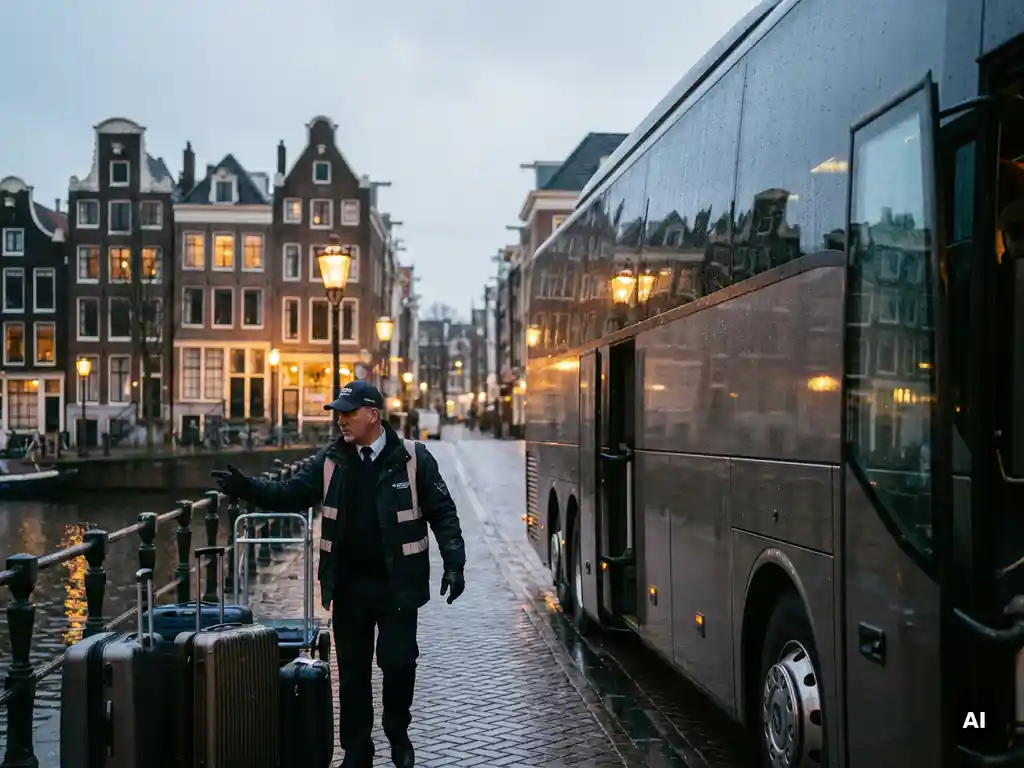
When a corporate group lands at Amsterdam Schiphol, the clock is already running. Transfers need to be staged, luggage coordinated, name badges ready, and a welcome briefing delivered before anyone has had a chance to adjust to the time zone. This is the reality of ground handling for corporate groups in the Netherlands, and it is far more involved than simply arranging transport from the airport to the hotel. Ground handling encompasses the full operational layer of a corporate group program, the behind-the-scenes coordination that determines whether an event feels effortless or exhausting for everyone involved.
For organizations bringing international delegations into the Netherlands for conferences, incentive programs, or executive meetings, the quality of ground handling is often the deciding factor between a forgettable trip and a genuinely impactful experience. Understanding what professional ground handling actually includes, and why it matters in a destination as logistically layered as the Netherlands, is essential for any event planner or corporate travel manager working in the MICE space.
The Scope of Ground Handling in Corporate Group Travel
Ground handling in the context of corporate group travel refers to the comprehensive on-the-ground management of all operational elements once a group arrives in a destination. This extends well beyond airport transfers, which Netherlands planners typically focus on first. A professional ground handler takes responsibility for the full movement and experience of a group from the moment they depart their home country to the moment they return.
In practice, this includes arrival and departure logistics, hotel rooming coordination, group transportation throughout the program, supplier management, on-site staffing, contingency planning, and real-time problem resolution. For MICE ground handling specifically, the scope often expands to include venue liaison, catering coordination, technical support briefings, and the management of pre- and post-event activities. The ground handler functions as the operational nerve center of the entire program.
What Makes Group Logistics in the Netherlands Uniquely Complex
The Netherlands presents a distinctive set of logistical challenges that make professional ground handling particularly valuable. The country’s infrastructure is world-class, but its density, its canal-divided city layouts, and its high volume of international business traffic create conditions where precision planning is not optional. Amsterdam’s historic center, for instance, has strict vehicle access restrictions that directly affect how and when coaches can move through the city. Rotterdam’s port-adjacent venues require different routing strategies entirely, and The Hague’s diplomatic district has its own protocols for large group movements.
Beyond physical geography, the Netherlands sits at the crossroads of European corporate travel, meaning that peak conference periods can put significant pressure on hotel availability, premium transportation, and experienced local staff. Groups arriving during major trade fairs or international summits will encounter a compressed supplier market where pre-negotiated relationships and local knowledge make a measurable difference. Corporate group logistics in the Netherlands therefore demand a level of local fluency that goes well beyond general travel management.
Key Components a Professional Ground Handler Manages
A well-structured ground handling operation covers several interconnected components, each of which requires dedicated attention and local expertise.
Transportation and Transfers
Airport transfers for corporate groups in the Netherlands involve more than booking coaches. A professional ground handler stages vehicles according to flight manifests, accounts for customs and immigration timing, assigns multilingual meet-and-greet staff, and manages the inevitable delays and flight changes in real time. For groups using multiple entry points, such as Schiphol, Rotterdam The Hague Airport, or Eindhoven, coordination across arrival hubs adds another layer of complexity.
Accommodation Management
Group hotel management includes rooming list coordination, VIP room assignments, early check-in negotiations, luggage handling protocols, and the management of room drops for branded materials or welcome gifts. A ground handler maintains direct contact with hotel operations teams to ensure that group-specific arrangements are executed as agreed, not simply confirmed on paper.
On-Site Staffing and Supplier Coordination
Corporate group logistics depend on a network of vetted local suppliers, from catering companies and audiovisual providers to activity operators and security personnel. A professional ground handler manages these relationships directly, briefing each supplier on group requirements, conducting pre-event site checks, and maintaining communication channels that allow for rapid adjustments when circumstances change.
What Separates Reactive Logistics from Proactive Ground Handling
The distinction between reactive and proactive ground handling is one of the most important concepts in corporate travel management. Reactive logistics means responding to problems as they arise: a delayed flight triggers a scramble for new transfer timing, a venue issue is escalated only after the group has already arrived. Proactive ground handling anticipates these scenarios before they occur and has contingency protocols in place before the program begins.
Proactive ground handlers conduct detailed risk assessments during the planning phase, identifying potential pressure points in the schedule, supplier dependencies, and destination-specific variables. They build buffer time into transfer schedules, maintain backup supplier relationships, and brief on-site teams on escalation procedures. For a destination management company operating in a high-demand market like the Netherlands, this forward-thinking operational discipline is what separates a smooth program from a crisis-managed one.
How Ground Handling Integrates with the Broader MICE Program
Ground handling does not exist in isolation. In a well-designed MICE program, the operational layer is fully integrated with the strategic and experiential layers of the event. This means that transportation schedules are built around conference session timings, not the other way around. Hotel rooming arrangements reflect the social and professional dynamics of the group. Transfers between venues become opportunities to deliver curated commentary or branded experiences rather than simply dead time between activities.
This integration requires that the ground handler be involved in the program design process from an early stage, not brought in as an afterthought once the schedule is already fixed. When ground handling is embedded in the broader event planning workflow, it becomes a tool for enhancing the delegate experience rather than simply a logistical necessity. For MICE programs in the Netherlands, this alignment between operational management and experiential design is what elevates a standard corporate trip into a strategically coherent event.
How GO DMC Handles Ground Operations for Corporate Groups
GO DMC provides end-to-end ground handling for corporate groups traveling to the Netherlands, combining deep local knowledge with structured operational management across every stage of the program. Rather than treating logistics as a separate function, GO DMC integrates ground handling into the full event design process, ensuring that every operational element supports the program’s broader objectives.
- Arrival and departure management: Dedicated meet-and-greet teams, real-time flight monitoring, and staged transfer coordination across all Dutch entry points
- Group transportation: A vetted fleet of vehicles suited to different group sizes and city-specific access requirements, including Amsterdam’s restricted historic center
- Hotel and accommodation coordination: Direct liaison with hotel operations teams for rooming lists, VIP arrangements, and group-specific logistics
- Supplier network management: Pre-vetted local suppliers across catering, audiovisual, activities, and venue services, with on-site briefings and contingency protocols in place
- On-site staffing: Multilingual event staff available throughout the program to manage group movements, resolve issues, and maintain schedule integrity
- Proactive contingency planning: Risk assessments and backup protocols built into the planning phase, not improvised on the day
Pricing for ground handling services depends on group size, program complexity, and the scope of services required. To understand which package structure fits your program, reach out to GO DMC directly for a tailored consultation.